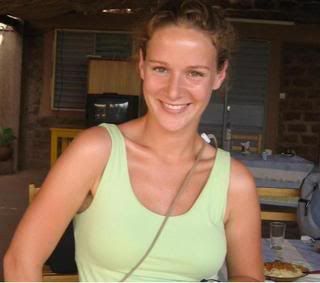
 Name: Caitlin

Local perspective
Constantly aware of my foreign status and outlook it was a great learning experience to walk through village with my counterpart's little sister and the equally educated nurse's aid. Adja is 17 and as quick to be bored as any 17 yr. old could be. Her family is from Ouahigouya, the big city compared to Gorom Gorom where she goes to school. When she visits her brother in Korizena she mainly studies as there is little of vlaue to do and see in such a small village. Adema is from Korizena but is likely one of the most educated, speaking fluent french and holding a relatively well paid position as nurse's aid and janitor to the health center.
They both stopped by my house one Sunday to borrow my cell phone and since it was out of batteries we left together to head back to the health center where the newly acquired electricity was proving useful. On the way I saw the educated interact with the local and learned what is not acceptable on Burkinabe terms.
After the 20th child greeted us with a shrill "Ca va! Ca va! Ca va!" Adja expressed her annoyance. "They are too young to all be doctors, why are they asking me how I'm doing? Who are they?" I clearly identified with this thought and my volunteer friends would agree. Our favorite kids are the ones who go to school and simply cross their arms and curtsey as you walk by, much more agreeable and I always return the the salutation of respect. To maintain my sanity the others I ignore.
Continuing on our walk one little girl stopped to stare as we walked by only to follow close behind once we had passed. This irritated Adja even more and after a few minutes she angrily motioned for the girl to go ahead of us. "But why did you do that Adja? Now we are downwind and can smell her." This was an obvious observation after a moment but it showed the clear difference in standards even from someone one who was raised in village. Even though neither parties have running water or flushing toilets they hold themselves to a higher standard for knowing the benefits of hygiene and practising what they have learned. Of course the local families are poor but that does not mean they can not afford soap for 100 CFA, roughly 20 cents. They do not consider it a priority and do not draw the parallel between dirt and disease the way we do. To them there are many causes for diesease learned from experience and from what they have been told by traditional healers. Malaria is cause by drinking tea before eating lunch, or if it is very windy while you sleep. I ask my neighbor what she washes her hands with and she tells me soap and water but she is only saying what she thinks I want to hear because I have yet to see a single villlager wash their hands with anything more than water. They have been told what to do, but clearly not why because they do not consider it to be important enough to change their habits. I consider that to be a issue of priorities which turns health education into a tricky business requiring cultural sensitivity and a strong argument for the necessity of change.
They both stopped by my house one Sunday to borrow my cell phone and since it was out of batteries we left together to head back to the health center where the newly acquired electricity was proving useful. On the way I saw the educated interact with the local and learned what is not acceptable on Burkinabe terms.
After the 20th child greeted us with a shrill "Ca va! Ca va! Ca va!" Adja expressed her annoyance. "They are too young to all be doctors, why are they asking me how I'm doing? Who are they?" I clearly identified with this thought and my volunteer friends would agree. Our favorite kids are the ones who go to school and simply cross their arms and curtsey as you walk by, much more agreeable and I always return the the salutation of respect. To maintain my sanity the others I ignore.
Continuing on our walk one little girl stopped to stare as we walked by only to follow close behind once we had passed. This irritated Adja even more and after a few minutes she angrily motioned for the girl to go ahead of us. "But why did you do that Adja? Now we are downwind and can smell her." This was an obvious observation after a moment but it showed the clear difference in standards even from someone one who was raised in village. Even though neither parties have running water or flushing toilets they hold themselves to a higher standard for knowing the benefits of hygiene and practising what they have learned. Of course the local families are poor but that does not mean they can not afford soap for 100 CFA, roughly 20 cents. They do not consider it a priority and do not draw the parallel between dirt and disease the way we do. To them there are many causes for diesease learned from experience and from what they have been told by traditional healers. Malaria is cause by drinking tea before eating lunch, or if it is very windy while you sleep. I ask my neighbor what she washes her hands with and she tells me soap and water but she is only saying what she thinks I want to hear because I have yet to see a single villlager wash their hands with anything more than water. They have been told what to do, but clearly not why because they do not consider it to be important enough to change their habits. I consider that to be a issue of priorities which turns health education into a tricky business requiring cultural sensitivity and a strong argument for the necessity of change.
posted by Caitlin | 4:32 AM

0 Comments:
Post a Comment
<< Home