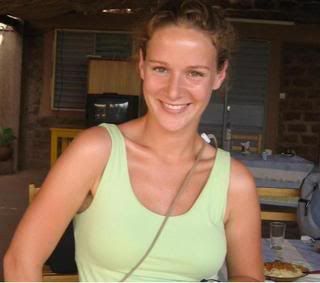
 Name: Caitlin


Oh, eyore
God it feels good to laugh out loud. My water boy yelled "Koko!" and I came out of my house to collect my water jugs. Originally they were 20L oil bins but they have a convenient handle on top and are the primary tool for water transportation. As Burema is unloading my water off the back of the donkey cart I notice his donkey has a new accessory. They've put a string through the end of a flashlight and attached the string around the donkey's head so the flashlight hangs down his nose. It looks like Eyeore is about to go spelunking and I just stand there and laugh. Donkeys have such a complacent look bordering indifference. The donkey turns awayas if to say well I like my headlamp anyway, and shines his light elsewhere.
As my amusement subsides I pick up my two water jugs (thats right I can carry two now) and wobble into my house. I have a bucket of sudsy washed laundry that's waiting to be rinsed and whole slew of uses for my new found wealth of H2o. Water has become harder and harder to come by considering the rainy season is now 3 weeks late and the pump next to my house is recently broken. I asked my water boy, Burema whether they were going to fix it because I know it is his family that is responsible for it. "Ah! But there is no money!" he cries throwing up his hands. "What about the 5cfa they charge for every water jug?" "Ah yes, there is that. Actually they are waiting for my uncle to come from a nearby village because he knows how to fix it." I swear, sometimes I think they had a village meeting before I arrived and told everyone that if I ever ask a question just say you have no money.
Why don't you go to the health center?
I have no money
Why don't you send your kids to school?
I have no money
Why don't you use soap?
I have no money
Why don't you give birth at the maternity instead of at home?
I have no money
Aha! Giving birth at the maternity is free - gotcha.
Now it becomes a question of priorities. Whether you acknowledge the health risk involved and accept that you have options to mitigate that risk. When they spend over 10,000cfa a year on medication for malaria that proves that they can afford the 3,000cfa to buy a mosquito net to prevent getting sick. But they tell me they do not have even 100cfa and there is nothing that they can do. In reality I have polled friends and neighbors and they tell me that you contract malaria from the wind or if you drink tea before eating. Therefore it is not clear the causes and effects of these diseases. When none of their friends of neighbors are sleeping under a mosquito net (except for that crazy white girl) then why should they.
We have the same problems in the US of people understanding that their habits are not healthy but not willing to change their ways. Obesity is pandemic and yet people still say they can not lose weight; eat less, exercise more, end of story. And yet they spend money on diet pills and acupuncture just as people here would rather boil leaves and drink the broth because they are convinced it will help, because they heard from a friend of a traditional healer that this is what to do. Why do we drink chicken soup when we have a cold? The same traditions guide our behavior but as a result the problems here are magnified thanks to poverty, strict religious piety and abslutely no government support. Addressing each of those factors is important but nothing will change without an adjustment of priorities. Here it is the money that motivates, not the goal of development. Of course this is a generalization so take it with a grain of salt and know there are exceptions. In order to learn a skill or become a specialist in any area you have to attend what they call a 'formation'. Basically this could last anywhere from a day to a week and consists of all day activities and information sessions that make you proficient in the subject matter. In order to hold a formation it is necessary to have enough money to pay all the participants for there time, food and lodging. Basically this would be like paying students to go to a week long seminar. These are the type of classes that in the US the participants would gladly pay for, but here they will not attend unless they will be compensated for there time. Of course I have argued countless times how they are being rewarded for the information gained, they do not need monetary compensation in addition. But that is the tradition here and they insist that if you do not compensate people for there time they will either not show or never come again.
Just some of the fun obstacles we get to deal with, my internet time is up although I could write about this for hours. Hope it made some sense, take care till next time!
p.s- A great motivator to wash your dirty clothes the same day is finding a scorpion asleep in your dirty laundry bin. I think the whole village heard me scream when I found out is was not dead. Ew!!! I promply doused it with insecticide and ran inside, problem solved.
As my amusement subsides I pick up my two water jugs (thats right I can carry two now) and wobble into my house. I have a bucket of sudsy washed laundry that's waiting to be rinsed and whole slew of uses for my new found wealth of H2o. Water has become harder and harder to come by considering the rainy season is now 3 weeks late and the pump next to my house is recently broken. I asked my water boy, Burema whether they were going to fix it because I know it is his family that is responsible for it. "Ah! But there is no money!" he cries throwing up his hands. "What about the 5cfa they charge for every water jug?" "Ah yes, there is that. Actually they are waiting for my uncle to come from a nearby village because he knows how to fix it." I swear, sometimes I think they had a village meeting before I arrived and told everyone that if I ever ask a question just say you have no money.
Why don't you go to the health center?
I have no money
Why don't you send your kids to school?
I have no money
Why don't you use soap?
I have no money
Why don't you give birth at the maternity instead of at home?
I have no money
Aha! Giving birth at the maternity is free - gotcha.
Now it becomes a question of priorities. Whether you acknowledge the health risk involved and accept that you have options to mitigate that risk. When they spend over 10,000cfa a year on medication for malaria that proves that they can afford the 3,000cfa to buy a mosquito net to prevent getting sick. But they tell me they do not have even 100cfa and there is nothing that they can do. In reality I have polled friends and neighbors and they tell me that you contract malaria from the wind or if you drink tea before eating. Therefore it is not clear the causes and effects of these diseases. When none of their friends of neighbors are sleeping under a mosquito net (except for that crazy white girl) then why should they.
We have the same problems in the US of people understanding that their habits are not healthy but not willing to change their ways. Obesity is pandemic and yet people still say they can not lose weight; eat less, exercise more, end of story. And yet they spend money on diet pills and acupuncture just as people here would rather boil leaves and drink the broth because they are convinced it will help, because they heard from a friend of a traditional healer that this is what to do. Why do we drink chicken soup when we have a cold? The same traditions guide our behavior but as a result the problems here are magnified thanks to poverty, strict religious piety and abslutely no government support. Addressing each of those factors is important but nothing will change without an adjustment of priorities. Here it is the money that motivates, not the goal of development. Of course this is a generalization so take it with a grain of salt and know there are exceptions. In order to learn a skill or become a specialist in any area you have to attend what they call a 'formation'. Basically this could last anywhere from a day to a week and consists of all day activities and information sessions that make you proficient in the subject matter. In order to hold a formation it is necessary to have enough money to pay all the participants for there time, food and lodging. Basically this would be like paying students to go to a week long seminar. These are the type of classes that in the US the participants would gladly pay for, but here they will not attend unless they will be compensated for there time. Of course I have argued countless times how they are being rewarded for the information gained, they do not need monetary compensation in addition. But that is the tradition here and they insist that if you do not compensate people for there time they will either not show or never come again.
Just some of the fun obstacles we get to deal with, my internet time is up although I could write about this for hours. Hope it made some sense, take care till next time!
p.s- A great motivator to wash your dirty clothes the same day is finding a scorpion asleep in your dirty laundry bin. I think the whole village heard me scream when I found out is was not dead. Ew!!! I promply doused it with insecticide and ran inside, problem solved.
posted by Caitlin | 3:45 AM
|
0 comments
